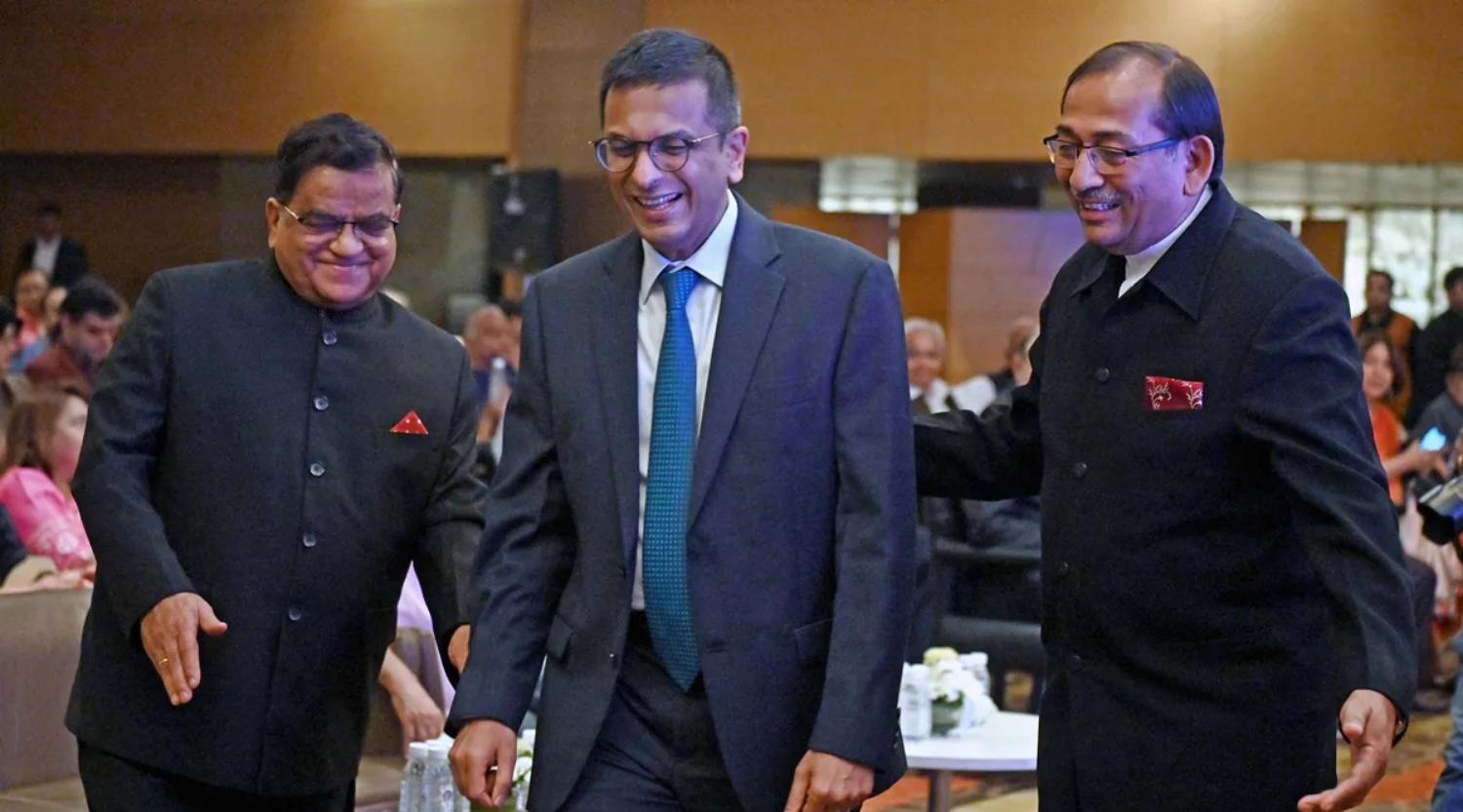
Chief Justice of India D Y Chandrachud emphasized the state’s responsibility to heed students’ representations, citing that courts often cannot intervene in policy domains. Speaking at the 19th Sir Ganga Ram Oration organized by Sir Ganga Ram Memorial Hospital in Delhi, he highlighted the influx of cases challenging decisions of the National Medical Commission and cases related to NEET that have reached the Supreme Court.

“Sometimes, even before a student begins their professional journey in medicine, the Supreme Court has had to intervene,” Chief Justice Chandrachud remarked. He underscored that while courts cannot always delve into policy matters, it remains the state’s duty to listen to students’ grievances. He stressed that judicial intervention becomes necessary in cases of injustice. The volume of litigation surrounding NEET, he suggested, reflects the aspirations of millions of students and underscores the need for reforms in medical education in India.
Furthermore, Justice Chandrachud, also Chairperson of the Supreme Court’s committee, expressed his commitment to equipping all courts in India with video conferencing facilities to facilitate tele-evidence for doctors. This initiative aims to save doctors’ time, which could be better utilized for patient care, medical education, and research. He cited a study by PGI Chandigarh indicating substantial benefits from tele-evidence, including financial savings and reduced carbon footprint.

The Chief Justice also highlighted the intersection of law and medicine in setting standards for medical practice, managing emergencies, and other medicolegal aspects. He voiced concerns about how factors like class, caste, gender, and regional location impact citizens’ health, and he specifically raised alarms about children in Delhi exposed to air pollution.
In his comprehensive address, spanning 45 minutes, Justice Chandrachud acknowledged the government’s plans to establish 157 new nursing colleges but stressed the ongoing need for incentives to encourage more medical professionals to practice in rural areas. He also emphasized the vital role played by Accredited Social Health Activists (ASHA workers) in strengthening primary healthcare in India, advocating for their recognition and economic support.